
How Often Should You Test Your Soil? A Season-by-Season Guide
Most farms in India should test soil at least once a year, ideally twice — once before Kharif sowing (May–June) and once before Rabi sowing (October–November). If you’re growing a third (Zaid) crop, farming intensively on the same field, transitioning to organic, or noticing yield drops without an obvious cause, test before that season too. Nitrogen levels shift fast and should be checked every season; pH, organic carbon, and micronutrients change more slowly and can be tracked once or twice a year. The right frequency isn’t one-size-fits-all — it depends on your cropping pattern, soil type, and what you’re trying to fix.
Why Soil Testing Frequency Actually Matter
A lot of farmers think of a soil test as a one-time report card — something you get once, and then you know your soil. But soil isn’t static. Every crop you grow pulls nutrients out. Every monsoon washes some away. Every round of fertilizer changes the balance a little.
Testing once and never again is like checking your health once in your life and assuming nothing changes. The real value of a soil test report comes from testing at the right intervals — often enough to catch problems early, not so often that you’re wasting money and time on tests that won’t show meaningful change. This is exactly why Soil Doctor’s soil testing kit is designed for repeat, in-field use across every season, not a single lab visit.
The Season by Season Soil Testing Calendar
India’s cropping calendar gives you a natural rhythm to test around. Here’s how to think about it.
Before Kharif (May, June, pre monsoon)
This is your most important soil test of the year for most farmers. You’re about to sow your main monsoon crop cotton, paddy, soybean, maize, pulses and you need to know what the soil can give it before you invest in seed, fertilizer, and labour.
What to check: pH, NPK levels (nitrogen, phosphorus, potassium), organic carbon, and moisture-holding capacity. If last season’s yield was disappointing, add a micronutrient check (zinc, boron, iron) using a portable soil testing device that can give you results in the field, not days later.
Why now: Testing before the rains means you can still correct deficiencies add lime if pH is off, apply the right basal dose before your crop goes into the ground.
Before Rabi (October–November, post-monsoon)
After the monsoon, nutrient levels look different. Heavy rain can wash away nitrogen and, on sloped or sandy fields, some phosphorus too. Before you sow wheat, mustard, chana, or other Rabi crops, a fresh soil test tells you what the monsoon left behind.
What to check: Nitrogen (almost always depleted), pH (can shift after heavy rain), and moisture status.
Why now: Rabi crops are often more sensitive to nutrient timing than Kharif crops. Getting the basal dose right at sowing makes a real difference to head or grain formation later.
Before Zaid (February–March, if you grow a summer crop)
If you’re growing a short-duration summer crop — vegetables, fodder, moong — between Rabi harvest and Kharif sowing, a quick nitrogen and moisture check is worth it, especially on fields that have already given two crops that year.
What to check: Nitrogen and moisture, at minimum.
How Often Should You Test If You're...
Not every farmer fits the standard twice-a-year rule. Here’s how to adjust:
Growing on the same field 3 times a year (intensive multi-cropping): Test before each sowing. Three crops a year means the soil never gets a real rest — nutrient depletion happens faster than the standard calendar accounts for.
Farming a new or newly leased field: Test before your first sowing, no matter the season. You’re working with an unknown — don’t guess.
Transitioning to organic farming: Test every season for the first 2–3 years. Organic matter and microbial activity build up gradually, and you’ll want to track the change to know your methods are working.
Seeing yield decline with no obvious cause: Test immediately, regardless of season. Don’t wait for the usual testing window — a hidden nutrient deficiency or pH problem can quietly cut yields for seasons before it becomes visible in the crop itself.
Farming the same crop, same field, for years with stable yields: Once a year is usually enough — full panel before your main season, quick nitrogen check before the second.
What Actually Changes Between Soil Tests (And What Doesn't)
Not every soil health parameter moves at the same speed, which is why you don’t always need a full test every single season:
Changes fast, check every season: Nitrogen, soil moisture
Changes moderately, check once or twice a year: Phosphorus, potassium, electrical conductivity
Changes slowly, check once a year or once every 2–3 years: pH, organic carbon, micronutrients (zinc, boron, iron, manganese)
Understanding this helps you save money — a quick nitrogen check with your soil testing kit before a second crop is often enough; you don’t need to redo every parameter every time.
Signs Your Soil Needs Testing Right Now — No Matter the Season
Some situations don’t wait for the calendar. Test your soil as soon as you notice:
Yellowing or pale leaves that don’t match normal crop stage
Stunted growth compared to neighbouring fields with the same crop
Patchy growth within the same field
Water pooling or draining unusually fast
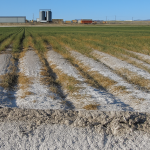
A visible white or salty crust on the soil surface
Yield drop of more than 10–15% with no clear reason (pest, weather, seed quality already ruled out)
Building Soil Testing Into Your Season, Not Just Your Memory
A soil test is most useful when it’s part of a routine, not a one-off event you remember only when something’s gone wrong. That’s really what farm intelligence means — and it’s the idea behind the Soil Doctor platform: testing isn’t the finish line, it’s the start of a season-by-season conversation with your soil. Test, get clear advice on what to apply and when, track how your soil responds over time, and use that record to make each season a little better than the last.
That’s the difference between a single soil test report sitting in a drawer, and a testing habit — supported by Soil Doctor’s network of trained Soil Didis — that actually improves your yield year over year.
Frequently Asked Questions
Is once a year enough for soil testing?
For most stable, single crop per year fields, yes test before your main sowing season. If you multi-crop, farm intensively, or have had recent yield problems, twice a year (or more) is better.
Do I need to test the exact same spot every time?
No, take samples from multiple spots across the field and mix them for one representative sample. Testing the same single spot can give you a misleading picture of the whole field.
How soon before sowing should I test?
Ideally 3–4 weeks before sowing. This gives you enough time to act on the results apply lime, adjust fertilizer, or make other corrections before the crop goes in.
Does soil testing frequency change with soil type?
Yes. Sandy soils lose nutrients faster (especially nitrogen and potassium) and generally need more frequent testing than clay-heavy soils, which hold nutrients longer.